
Silvia Trevisan is PhD and Assistant Professor in Thermal Technologies for Industrial Decarbonization at KTH Royal Institute of Technology in Stockholm. In April she hosted the latest Expert Meeting in IEA Energy Storage Task 44. The next meeting will be in Denmark on September 18th.
By Julie Søgaard
“The scope of the meeting in April was to follow up on the key activities ongoing in the context of Task 44 ‘Hi CBest: Power-to-Heat and Heat integrated Carnot Batteries for Zero-Carbon (industrial) Heat & Power supply’ and to have a review of some key case studies and use case studies from different industries. It is essential to have a clear view on the different industrial needs and requirements for industrial decarbonization to ensure that the most relevant and suited technologies are considered and promoted forward” Silvia Trevisan says.
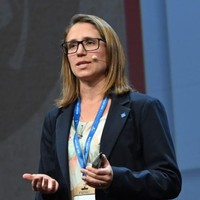
During the Expert Meeting and a Symposium on Heat and Power Technologies for Industrial Decarbonization held at KTH and organized by the Heat and Power division the following day, the need for standardization also came up.
“We had a big discussion about how these technologies could be standardized or how to have a more standard evaluation of performances in a way that could be relatively simple. In this way different stakeholders can have a clear understanding of the advantages and challenges of a different technologies,” Silvia Trevisan says.
The task participants agreed that standardization is very relevant but also very complex and not as straightforward as somebody might think.
“I think there is a big need for the task trying to be a place, where this type of standardization and alignment activities also could be done aiming at transparent and effective discussions,” Silvia Trevisan says.
Additionally, there was a discussion about regulations and legislation and how these can affect and is affecting the development and deployment of technologies for industrial decarbonization.
“The exploitation of these technologies and the potential for their installation within different industrial contexts is largely affected by different regulations and legislation, which are also massively stirring the decision-making process behind that,” Silvia Trevisan says.
Therefore, researchers should, according to Silvia Trevisan, be more proactive and engage with the policymakers. Plain communication channels should be set and maintained and common understanding and awareness should be raised.
“And not just a single conversation at some moment, but more a continuous work together, which I think would be more fruitful,” she says.
Silvia Trevisan is originally from Italy where she became a mechanical engineer. She moved to Sweden some years ago to do her PhD in Energy Technology.
“And then I stayed,” she says.
Her division is primarily working on the development of technological components, sub-components and integrated systems with a focus on thermal solutions for industrial applications.
“I have a strong background in this field, particularly high temperature storage for industries purposes, electric heaters, heat pumps, heat exchangers etc.,” Silvia Trevisan says.
“Whether it’s heat pumps or energy storage, the purpose is to make the system as efficient as possible, but also as flexible and cost-effective as possible” Silvia Trevisan says.
She thinks that several technologies are already on the market and ready (or very close to be such) for a larger scale deployment. So, for many of these technologies it is a matter of further improvement but also massively raise awareness.
“The type of work we do in my group is applied research. From a technology perspective we are a few TRL steps higher than the typical basic research. Like TRL 5 or 6,” Silvia Trevisan says.
Her group works with several companies trying to implement their technologies particularly in relation to different types of high-temperature heat pumps, pushing the boundaries to 200 or 400 ◦C, compact heat exchangers, direct electric heaters, pyrolysis based reactors, as well as thermal storage applications for solutions up to 900 ◦C.
Silvia Trevisan is looking forward to the next Expert Meeting in IEA Energy Storage Task 44, which is planned to be on September 18th in Denmark. Here, the discussions about research and technology will continue.